
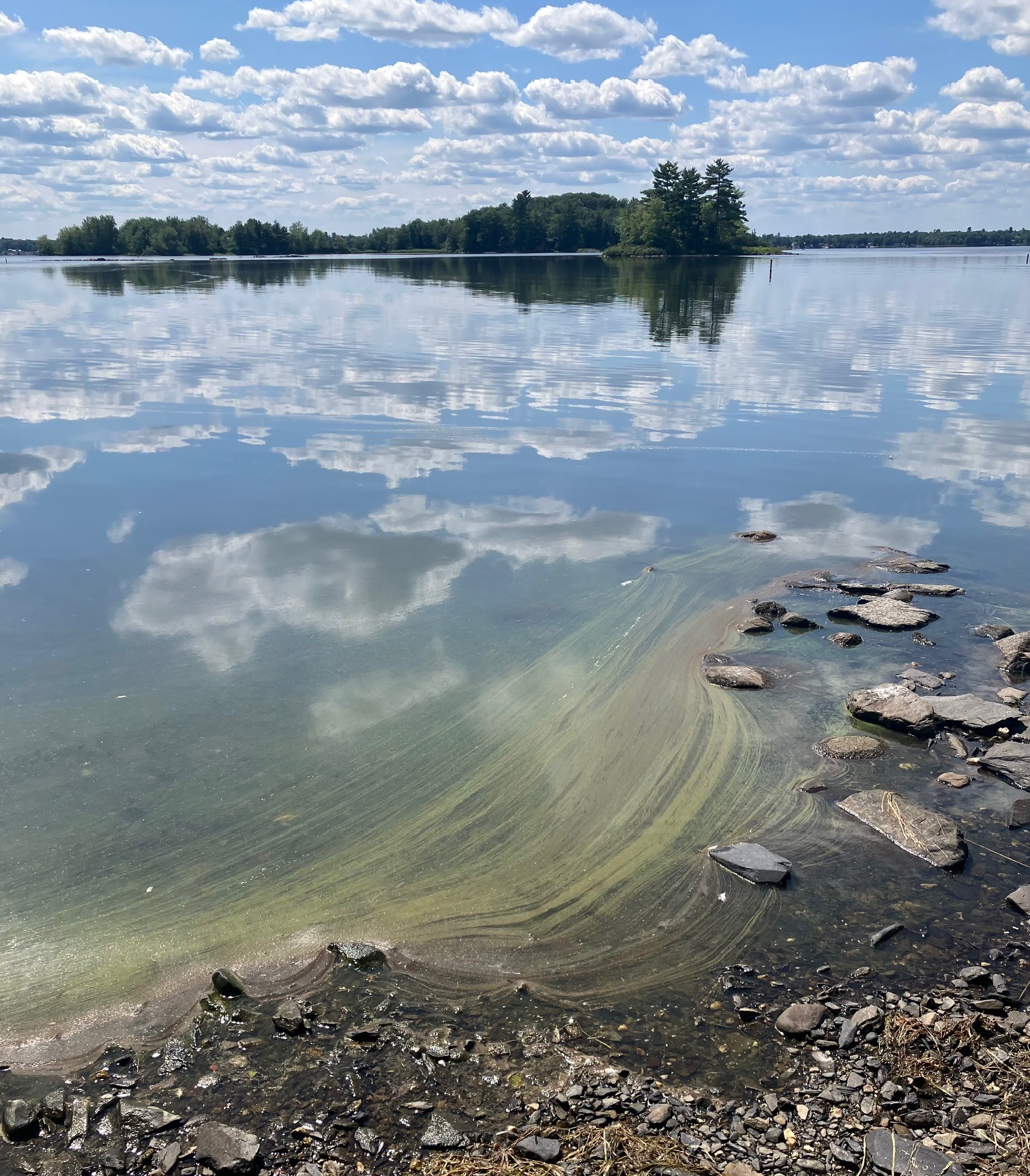
Why does Lake Winnecook need an alum treatment?
Lake Winnecook, also known as Unity Pond, has a phosphorus problem.
Phosphorus is a nutrient that algae need to grow. When too much of it enters—or is released from within—the lake, it can feed blue-green algae blooms. These blooms can make the water green and cloudy, reduce oxygen for fish and other aquatic life, and sometimes produce toxins that can affect people, pets, and wildlife.
Some phosphorus reaches the lake through runoff from roads, driveways, septic systems, and other development in the watershed. But that is only part of the problem. Phosphorus has also built up in the lake-bottom sediments over time. During warm summer months, when oxygen near the lake bottom is low, that stored phosphorus can be released back into the water—fueling more algae growth.
That means protecting the watershed and reducing erosion remain essential, but they cannot solve the problem on their own. An aluminum (alum) treatment is recommended to bind phosphorus already stored in the lake’s sediments, making it unavailable to feed future blooms. Together, watershed protection and in-lake treatment offer the best path toward cleaner, healthier water.
The questions and answers below explain the science in more detail.
Why is an aluminum treatment recommended for Unity Pond?
A two-year study of Unity Pond shows that lowering phosphorus (P) levels can decrease the likelihood of blue-green algal blooms. However, reducing P loading from the watershed alone will not meet the 2023 Watershed-Based Management Plan goals for water quality and algal bloom reduction. Additional measures are required to inactivate phosphorus in the lake’s sediments. Toxins produced by cyanobacteria, including microcystin have been documented in Unity Pond, and were found to exceed the US EPA’s acceptable cyanotoxin levels for recreation in downwind scum samples and the drinking water standard for non-school age children, school-age children, and adults at all stations between 2014-2019.
Is the algae problem (cyanobacteria) in Unity Pond a health issue?
Cyanobacteria (blue-green algae) can produce toxins that affect humans, pets, and wildlife. Not all blooms are harmful, and toxins are not always produced. Testing by Maine DEP at Unity Pond from 2014 to 2019 found the common toxin microcystin in amounts too high for safe recreation and drinking water at various locations, including open water. For more details on harmful algal blooms (HABs) in Maine lakes, visit the Maine DEP website.
Why does oxygen drop near the bottom of the lake?
Microbial respiration at the bottom of the lake uses up dissolved oxygen (DO) as microbes break down decaying plants and animals. If the surface water doesn’t mix and replace the oxygen, DO levels drop. Low DO has been found in water as shallow as 6 meters (20 feet) over an area of 1,084 acres. This problem usually occurs in the summer, but it can also happen in winter or whenever mixing isn’t enough to bring new oxygen to the sediment. Higher summer temperatures lead to more microbial activity and greater oxygen consumption.
How does low oxygen release phosphorus from the lake bottom?
Internal phosphorus (P) recycling, also known as “internal loading,” is the result of several processes that release P from sediment. Decaying plant and animal matter is one source, but the majority of the P is released when DO at the bottom of the lake is depleted. Under low oxygen conditions, iron-phosphate compounds undergo reactions and P and iron are released into the water column. Internal P loading via release from sediments exposed to low oxygen is a significant source of P to the lake (estimated at 20% of the total P load). Internal recycling has become a self-sustaining cycle that cannot be broken without significant in-lake management measures.
How are algae connected to phosphorus in the sediment?
Cyanobacteria, also known as blue-green algae, are important for Unity Pond as they absorb phosphorus from the sediment. This area of the lake receives sufficient light, enabling the algae to flourish where the water meets the sediment. By absorbing phosphorus before it can be deactivated by oxygen, these algae can trap gas and ascend, resulting in blooms in the upper water layers. This illustrates the significant role cyanobacteria play in the ecosystem of Unity Pond.
What are the driving factors for the changes in water quality in Unity Pond over the past 20+ years?
Weather and climate significantly affect lakes in Maine and New England. Data reveal warmer summers lead to increased cyanobacteria due to faster metabolic processes, causing oxygen depletion and higher algae growth. As air temperatures rise from climate change, lake water temperatures also rise, resulting in more biological activity, reduced oxygen, and increased algae. Ongoing development in the watershed—like roads, buildings, driveways, and septic systems—adds phosphorus (P) to the lake, along with historical P from industrial, residential, and agricultural sources, further contributing to algal growth.
Can erosion-control projects alone stop algal blooms?
Since 2004, two phases of erosion control projects have been carried out in the Unity Pond watershed to help reduce phosphorus (P) entering Unity Pond. However, managing the watershed alone doesn't stop algal blooms, which also result from runoff and internal sources. Internal loading contributes about 20% of the P in Unity Pond and needs to be managed alongside erosion control. Long-term inputs still affect the internal load, so ongoing watershed management is vital for the future. Reducing phosphorus delivery through erosion control in both the direct watershed (53% of the P load) and upstream areas (23% of the P load) is essential for improving water quality in Unity Pond.
Please click here if you would like to contribute toward our lake’s rehabilitation effort. Remember, every dollar you pledge is matched dollar for dollar, as long as your donation is received by Dec. 31, 2026.